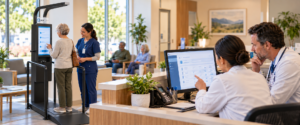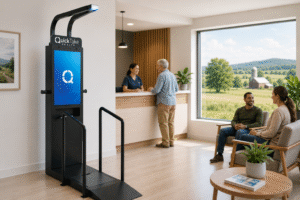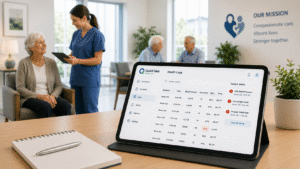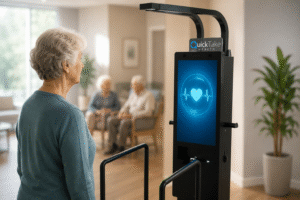
QuickTake brings biometric measurements and approved digital health assessments into one automated patient intake workflow. Patients complete the process during check-in, while care teams receive relevant information before the provider enters the room.
Patient visits often start with paperwork, waiting, and repetitive routine questions. QuickTake streamlines those first steps, creating a faster, more engaging experience at the point of care. When patients complete health assessments during check-in, providers receive relevant information before the visit begins. This gives care teams a more complete view of each patient while reducing manual documentation and repetitive intake tasks for staff.
What Can a Point-of-Care Health Assessment Capture?
A point-of-care health assessment is completed where care is delivered, typically during check-in. It brings together biometric measurements and patient-reported information in one guided workflow.
QuickTake captures key measurements including weight, height, blood pressure, heart rate, body mass index, pulse oximetry, respiratory rate, and mood assessment. Organizations can also use approved digital assessments to gather information about overall health, sleep, nutrition, exercise, weight management, and wellness goals.
Measurements tell only part of the story. For example, a patient may have normal biometrics but report several nights of poor sleep or a recent change in how they feel. That response does not create an automated conclusion. It gives the care team a clearer reason to ask follow-up questions, provide education, or take the next step within their established care process.
Why Automated Patient Intake Matters
Care teams can make more informed decisions when complete, relevant health information is available at the time of care.
When forms are sent before an appointment, patients may forget to complete them. Paper forms also require staff to review, enter, and verify information, creating additional work and the opportunity for transcription errors. If questions are asked only after a patient reaches the exam room, valuable time is spent on routine intake rather than the patient conversation.
QuickTake helps move this work earlier in the process. During the Center for Orthopaedics Time & Motion Pilot, a QuickTake scan took 15 seconds, compared with 3.5 minutes for a manual process. The pilot also found that QuickTake saved approximately two hours of staff time per day and earned an 86% approval rating from more than 1,000 surveyed patients.
Less friction at the beginning of care creates a smoother patient journey and gives staff more time to focus on the people in front of them.
A Connected Experience From Check-In to Follow-Up
QuickTake turns traditional check-in into a guided health engagement experience. In one session, patients can complete approved assessments and capture key biometric measurements through a clear touchscreen workflow.
The information can then integrate directly with connected EHR systems, reducing the need for handwritten notes and manual re-entry. This gives care teams a more consistent way to review results, document routine information, and prepare for the patient encounter.
QuickTake helps organizations bring together:
- Guided digital health assessments
- Automated biometric measurement
- Patient education & engagement
- Direct EHR integration
- A simpler, more consistent intake workflow
This helps turn an ordinary check-in into a more meaningful health touchpoint. Explore how QuickTake supports medical clinic workflows and EHR integration.
Better Information Without Added Staff Burden
QuickTake does not replace the human side of care. It reduces the routine work that can take attention away from it.
By bringing assessments, biometric measurements, education, and documentation into one workflow, QuickTake helps organizations reduce repetitive tasks and begin every visit with a clearer picture of the patient.
Better care does not start in the exam room. It starts at the point of care.